How we earn the trust we promise.

Three pillars, one system:

  • A strict consent rule,
  • Reports from a real community,
  • An independent foundation.
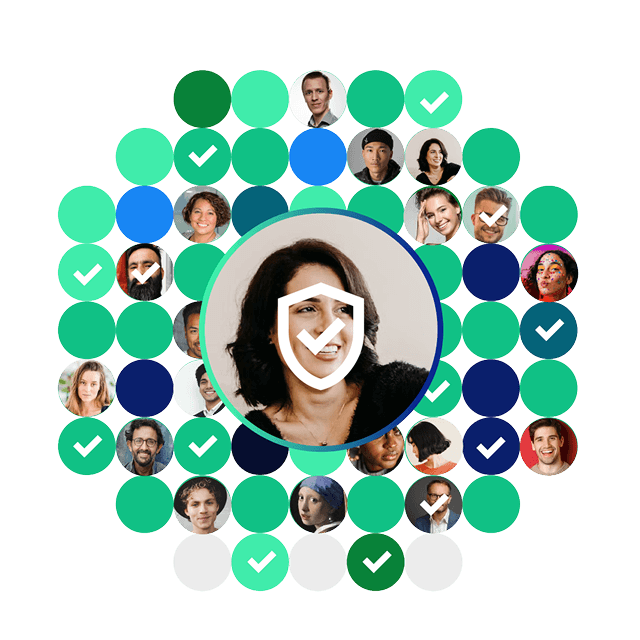
A circle of community members surrounded by verification checkmarks

Three pillars of trust

Consent-first verification

We only show what's safe to show.

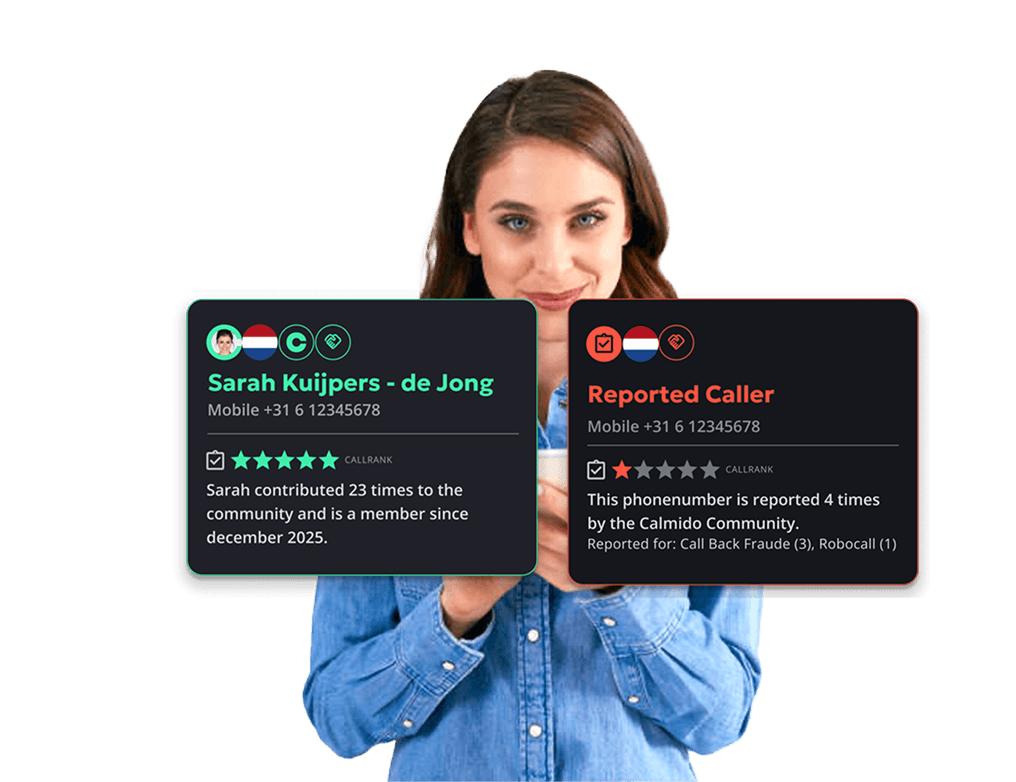
Calmido Phone shows a caller's name in three cases only:
  • When the caller is in your own contacts,
  • When it's a company and the name comes from public business data,
  • When the caller is a registered user who has explicitly chosen to be visible.
Everyone else is a number, plus whatever the community has reported about it. A private individual's name is never shown without their explicit consent.

Community reports

Scams get caught by the people who got called.

When someone reports a number for scam, phishing, a callback trick, a robocall, or a silent call, the next person calling that number sees the warning.

The faster a report lands, the faster others are protected.

Names of people who submit reports are never shown publicly.

An independent protocol we don't control

The verification layer isn't ours.

Calmido is a Dutch company. The verification protocol behind Calmido is called TARIDE, an open attestation standard governed by a separate, independent Dutch foundation, in formation.

Calmido B.V. doesn't control that foundation. The point of the separation is simple: the layer that decides whether a caller is who they say they are can't be corrupted by us, a competitor, or an acquisition.
A lock illustration symbolising the data Calmido never collects

What we never show

  • A private individual's name without their explicit opt-in.
  • Names attached to scam reports. Anyone who submits a report stays anonymous.
  • The content of your calls. We don't listen.
  • Your contact list. It never leaves your phone.
  • Your location. We don't track it.

How it fits together. The full picture.

Here's what happens when someone calls you. Calmido looks for the number in four places, in order:
  • Your own contacts,
  • Public business data,
  • Registered users who've opted in to visibility,
  • Community reports.
Whatever it finds, it shows you. Whatever it doesn't find, it leaves as a number. As the TARIDE protocol comes online, organisations will attest to their own numbers directly — that becomes the strongest signal.

None of these layers require us to hold your private data, sell it, or make exceptions to the consent rule.
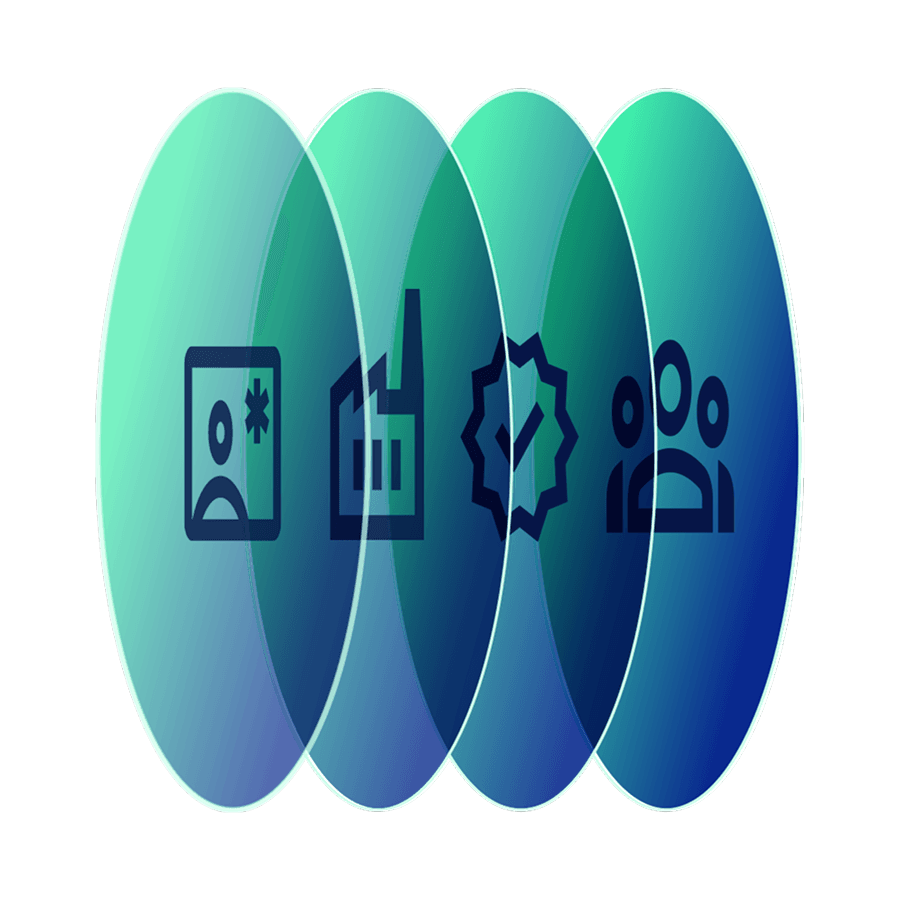
Four layers of caller verification, stacked from most trusted to contextual: your contacts, public business data, opt-in users, community reports.

What's coming next.

Today, Calmido helps you see who's calling you. The TARIDE protocol will work in both directions. Once it's operational, your verified status travels with your outgoing calls. Anyone whose phone is TARIDE-compatible will see you're real, even if they don't use Calmido themselves.

That's the part of the system that benefits everyone, not just our users. This only works because the protocol is open. Closed verification apps can render trust inside their own walls; they can't extend it to people who use something else.
A person holding a phone showing a verified outgoing call.

How we're structured
and why it matters.

Calmido is a Dutch B.V., a for-profit limited company. That's all it is. The verification protocol is governed by a separate legal entity: the TARIDE Foundation, currently in formation with Dutch notarial oversight. The foundational documents are already published at taride.org.
When the foundation is formally established, further governance documents will be published. The separation answers a reasonable question: "what if Calmido becomes evil, or gets acquired?"

The answer: the verification layer continues. We don't own it. If you want to check for yourself, the documents are public.

Ready to see it in action?

Try a phone number in the Calmido Directory.
No account needed to search.

A person holding a phone, about to answer a call.